
El
Bordado Colectivo
The Bordadoras de Isla Negra collective received an invitation to participate with a large-scale work to be installed at the entrance of the main convention hall in the headquarters of the UNCTAD III building, which the Chilean State was constructing in Santiago.
This large tapestry would be one of the 38 works of art created by Chilean artists to be integrated into the new building, showcasing the country’s natural resource production systems.
A chronicle of its history follows.
01.
Summer 1972, Isla Negra
Creation
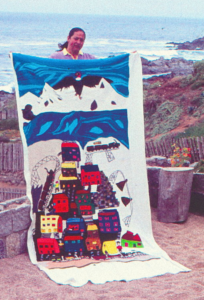
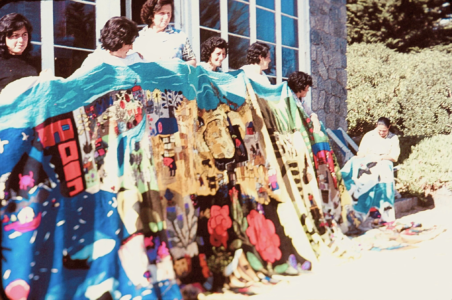
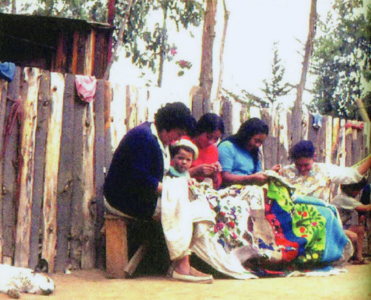
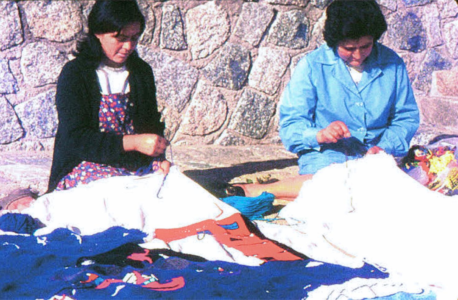
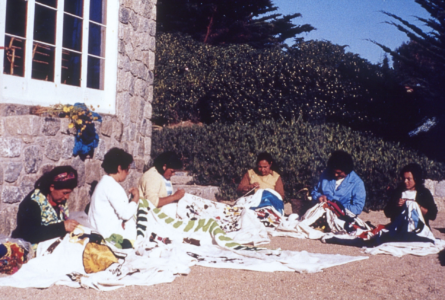
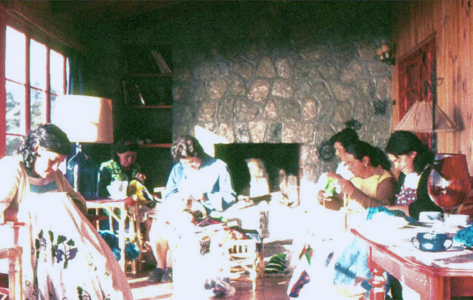
With a limited timeframe and working against the clock, as the work had to be delivered by late March, a group of ten embroiderers made themselves available for this project.
AUTHORS
Rosa Santander
El mar y la caleta
(The sea and the cove)
Edulia Pérez & Tránsito Díaz Álvarez
Siega y trilla
(Mowing and threshing)
Adelaida Díaz
Rosas y flores
(Roses and flowers)
Purísima Ibarra
El campo de Graneros
(The countryside of Graneros)
Adela Ayala
El hogar
(The home)
Inés & Tránsito Díaz Espinoza
Central hidroeléctrica
(Hydroelectric plant)
Rosa Inés Ibarra
Vendimia
(Grape harvest)
Elsa Araya
Campamento de Sewell
Sewell camp
02.
April 1972, Santiago.
Installation and Inauguration of UNCTAD III

At the end of March 1972, once the large embroidery was finished, it was taken to Santiago and installed on the wall designated for it at the entrance to the main convention hall. The inauguration of the international event, attended by participants from all over the world, began its work as the final touches were completed and the laborers, technicians, professionals, and volunteers of the human team—who had built this epic project in a record time of 275 days—withdrew.
In May 1972, after the conference concluded, the building was transferred to the Ministry of Education. Thus, the Centro Cultural Metropolitano Gabriela Mistral (Metropolitan Cultural Center Gabriela Mistral) (CCMGM) was born, named in honor of the poet, with Irma Cáceres de Almeyda serving as its first director. For over a year, its spaces were occupied by social, student, and cultural organizations. The Bordado Colectivo remained installed, alongside the other works, as a grand textile mural, highly appreciated by all visitors to the cultural center.
03.
September1973, Santiago.
Disappearance
Following the 1973 coup d’état, during which the military junta bombed Chile’s Government House, the responsible regime established its headquarters in the UNCTAD III building. The site was renamed Diego Portales, and many of the integrated artworks disappeared, their traces lost.
One of those works was the Bordado Colectivo by the Bordadoras de Isla Negra, which remained missing for forty-seven years without any information regarding its condition or whereabouts.
04.
2019 - 2021, Santiago.
Silent Reappearance

The embroidery reappeared in mid-2019, cut into four pieces. Its creators were neither informed of this significant news nor included in the decision-making regarding the work’s fate.
What followed was a long period of silence and closed-door negotiations to decide its ownership and future between the former Senator of the Republic, Guido Girardi, who held the work in his possession for many years, and the highest authorities of the Ministry of Culture at the time and the Gabriela Mistral Cultural Center (GAM).
The Isla Negra Foundation, which for decades has protected the work and authorship of the Bordadoras de Isla Negra, interceded on behalf of the creative artists and owners of the Bordado Colectivo. The restitution proposal was dismissed, and ultimately, its ownership resulted in a lack of transparency regarding the legal status held by the Chilean State, represented by the Ministry of National Assets, and a subsequent loan agreement to GAM.
Despite this, and thanks to the activities promoted by the foundation, the Bordado Colectivo began a journey of reunion with its creators and the public eye.
05.
May 2021, Isla Negra.
Reunion with its Authors
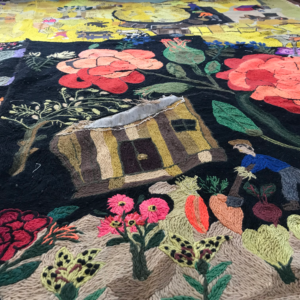
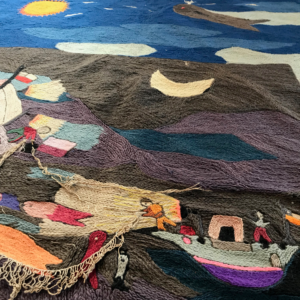
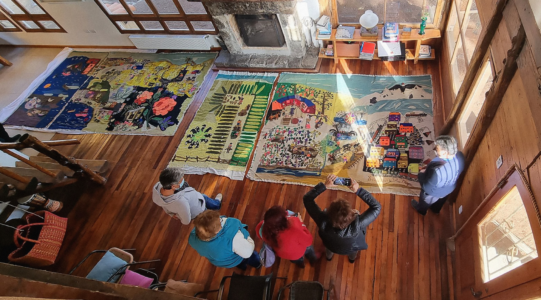
The foundation organized a reunion between the embroiderers and their work in the winter of 2021, marking the end of the pandemic isolation. With the collaboration of GAM, the embroidery was moved to Isla Negra and spread out on the floor of a house, where the women arrived accompanied by close family members.
“This embroidery is part of our family stories, stories of community,” reflected the daughter of one of the embroiderers.
06.
December 2021 to March 2022, Paine.
Restoration
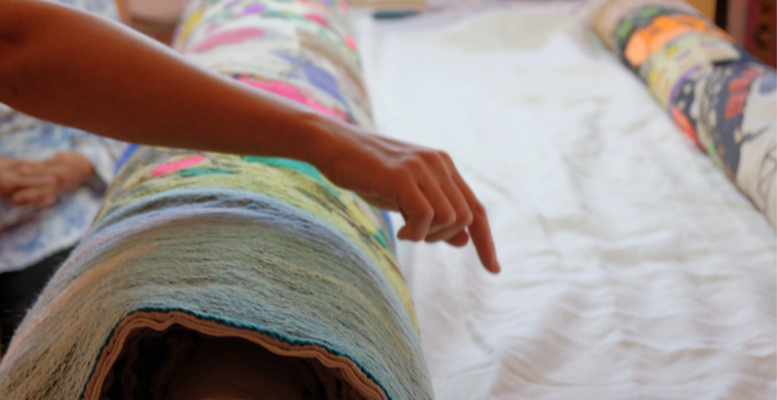
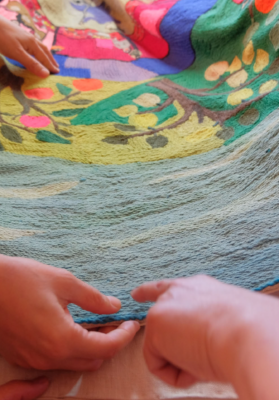
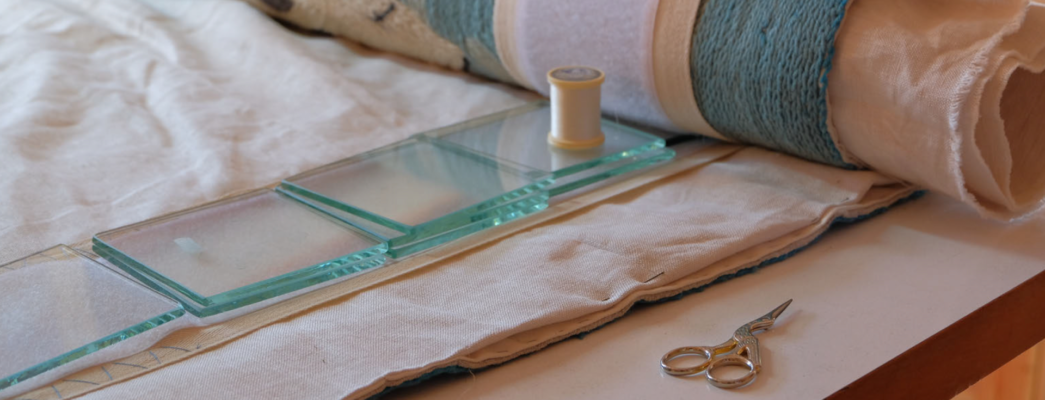
The hands of professional women in textile restoration and conservation worked delicately on the embroidery for three months to bring it back to life and protect its future. A silent labor of sisterhood that makes them proud and dignifies the authors.
07.
April 2022, GAM.
Reunion with the Public
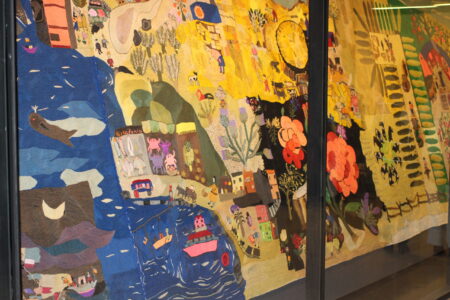
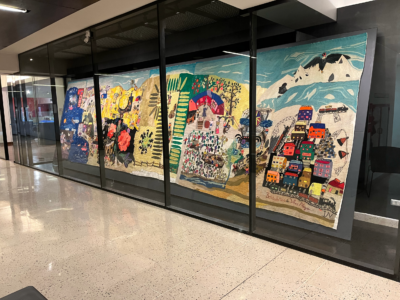
Celebrating the 50th anniversary of the inauguration of the UNCTAD III building, a ceremony was held to honor all participants, including the embroiderer artists. Since that date, the Bordado Colectivo has been on public display at GAM.
08.
September 7 to November 5, 2023, GAM.
La Resistencia de una Espora. El Museo de la Solidaridad vuelve a GAM
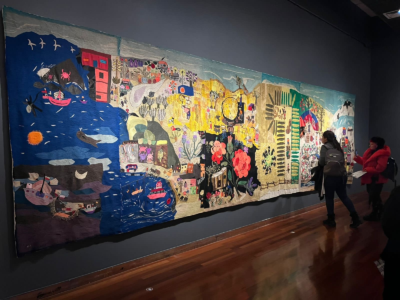
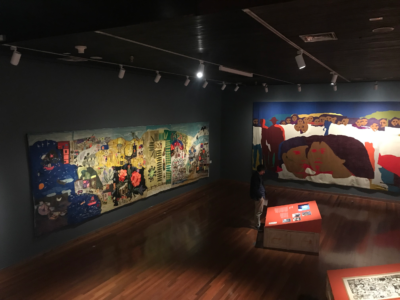
The Bordado Colectivo was exhibited alongside more than 40 works from the collection of the Salvador Allende Solidarity Museum (MSSA) at the GAM Visual Arts Gallery. This temporary exhibition, La Resistencia de una Espora. El Museo de la Solidaridad vuelve a GAM (The Resistance of a Spore. The Museum of Solidarity returns to GAM), was curated by the MSSA team in collaboration with GAM, highlighting the history of works that disappeared following the military coup and the subsequent recovery of some of them.
09.
December 8, 2023, to January 7, 2024, Pablo Neruda Museum Isla Negra.
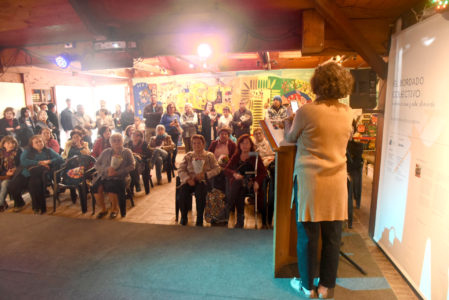
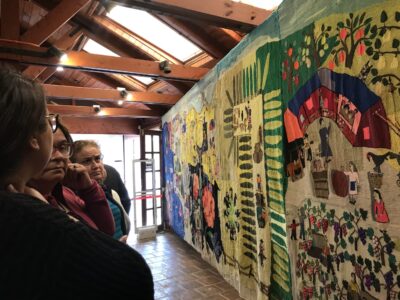
First Exhibition: El Bordado Colectivo vuelve a casa y sale al mundo
As part of the foundation’s commitment to the Isla Negra community, the Isla Negra Foundation managed this exhibition, whose title translates to The Collective Embroidery Returns Home and Goes Out to the World, to bring the work back to its place of origin, marking a significant return to honor its authors
10.
2024, Venice, Italy.
60th Venice Biennale 2024

The Bordado Colectivo by the Bordadoras de Isla Negra was selected by Adriano Pedrosa, curator of the main exhibition of the 2024 Venice Biennale, to be part of the exhibition Stranieri Ovunque – Foreigners Everywhere alongside other Chilean and international works. Installed in the city’s Arsenale, the work was seen by thousands of people from around the world between April and November 2024.
The Ministry of Culture and the Ministry of Foreign Affairs made the presentation of the large embroidery at the Biennale possible. The informative text that accompanied the work omitted the names of its authors and provided erroneous data regarding the context of the creation and production of the embroidery and the artists’ collective.
11.
May 31 2024, Pablo Neruda Museum House Isla Negra.
Recognition of the authors for the presentation of their work at the 60th Venice Biennale

By initiative of the foundation, the authors received official recognition for the participation of their work in the 60th version of the Venice Biennale. The Minister of Cultures, Arts, and Heritage, Carolina Arredondo, was present at the event.
12.
January 10 to March 23, 2025, Baburizza Palace Museum
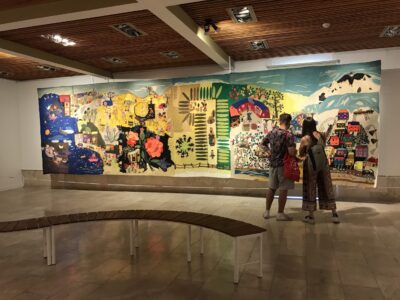
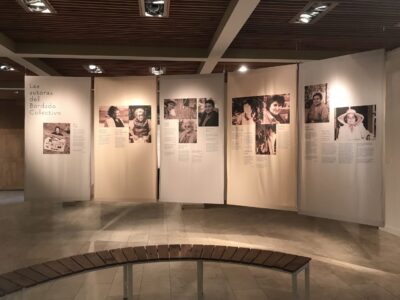
Second Exhibition: El Bordado Colectivo vuelve a casa y sale al mundo
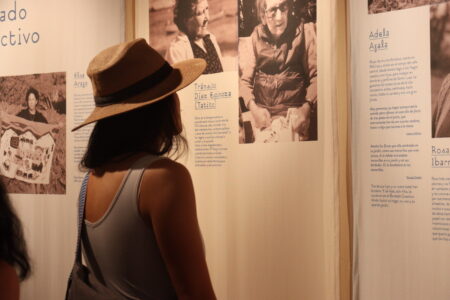
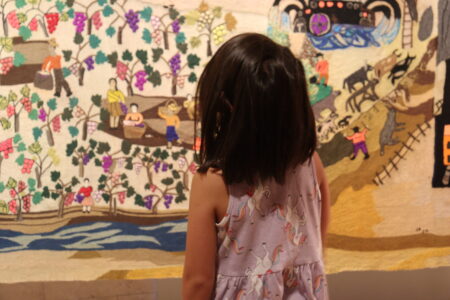
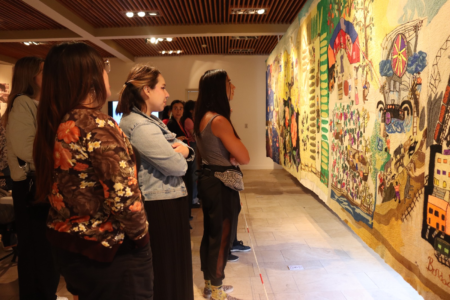
The foundation resumed the tour of this exhibition in the city of Valparaíso at the Baburizza Palace Museum. The show, which included biographies and the chronicle of the work, was inaugurated with the presence of some of the authors and embroiderers who traveled from Isla Negra. It was visited by more than 12,000 people during the summer of 2025.
13.
April to October 2025, Chile Pavilion, Osaka, Japan.
World Expo 2025 Osaka
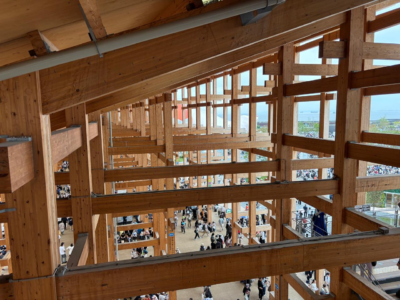
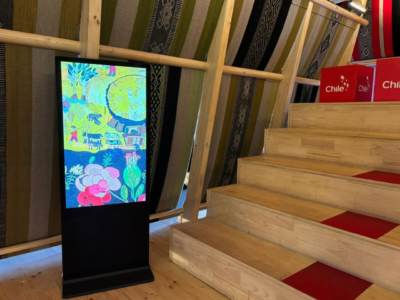
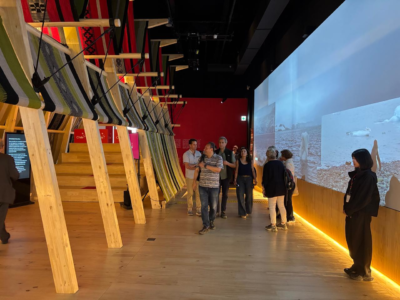
Gonzalo Puga Larraín, designer and photographer, created a visual capsule featuring a subtle journey through objects, scenes, and trades that appear in the Bordado Colectivo. It was projected inside the Chile Pavilion to introduce the Japanese public to the rural customs and trades of the country through textile art, united by the Pacific.
14.
November 18 2025, Alberto Hurtado University, Santiago.
Talk: Las Bordadoras de Isla Negra en el horizonte de la UNCTAD III
Josefina de la Maza, an art historian, has collaborated with the foundation since 2019, specifically focusing on this major work. In this talk, she explored the historical context of the Bordado Colectivo in relation to the UNCTAD III summit. She also wrote the curatorial text for the exhibition El Bordado Colectivo Vuelve a Casa y Sale al Mundo in Isla Negra and Valparaíso and conducted comprehensive research for the forthcoming book on the history, work, and authorship of this artistic movement.

In view of the history described in this chronicle
Our reflection and stance challenge the citizens, the institutions, and the legal system of our country regarding the absence of the concepts of authorship and ownership in the actions taken regarding this work, from its disappearance until today.
Our purpose and ethical commitment to the authors is to achieve a legal and symbolic restitution of the work, restoring its dignity as an artistic creation.